
Tokenised racehorse shares are now trading on a FINRA-member alternative trading system
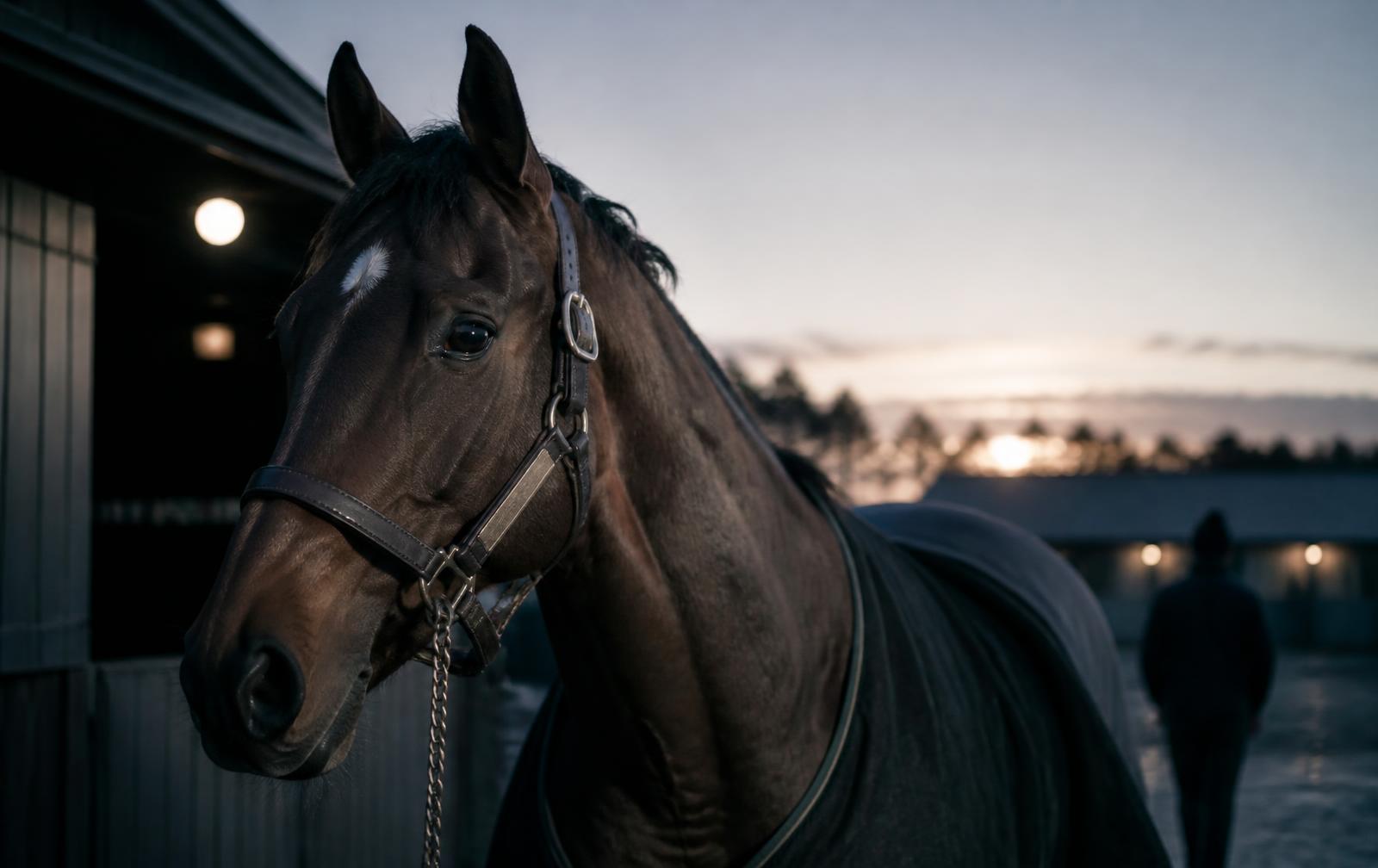
On Morningline, individual horses such as Take Charge Omaha trade as named securities with live order books — an early template for what a regulated secondary market in equine assets looks like.
Venue
Morningline / liquidity.io
Broker-dealer
ARQ Securities (FINRA)
Structure
ATS with live order book
Instrument
Per-horse ticker
Morningline lists individual racehorses as tradeable securities, each with its own ticker. Take Charge Omaha trades as TKCHRGMH alongside a roster of other named horses, with a full two-sided order book, a 52-week range, volume reporting and standard order types. Securities on the platform are offered through ARQ Securities, a FINRA-member broker-dealer operating the associated alternative trading system.
What matters here is not the technology but the plumbing. Ownership of record sits with a securities custodian and a transfer agent, with the blockchain acting as a settlement and reporting layer rather than the source of truth. That ordering — regulated custody first, tokenisation second — is the arrangement institutional allocators have been waiting for before they treat fractional equine exposure as a serious asset class rather than a novelty.
The market is still thin. Order books show limited depth, trading days can pass without a print, and the platform's own disclosures are explicit that tokenisation offers no guarantee of secondary liquidity. Private securities of this type carry limited financial disclosure, restricted transferability and a genuine risk of total loss. None of that is unusual for an emerging venue; it is simply the honest starting position.
For the wider sport, the significance is structural. A visible, continuously quoted market in individual horses creates something the discipline has never had: an observable price series for a living asset, and a reference point against which private valuations can be argued. Racing has reached that point first. Showjumping, with longer competitive careers and a clearer earnings and breeding profile per horse, is the more natural home for the same machinery.
What it means for the fund
Regulated venues listing single horses validate the core premise behind Stable Yield Fund 1 — that equine assets can be held, priced and reported like any other institutional holding. Our approach differs deliberately: a diversified pooled vehicle with professional management, rather than concentrated single-animal exposure on a thinly traded book.